Friday, July 17, 2015

How to identify a flower from a photo - Pokedex for flowers

Previously, I had written about how to identify a bird from a photo or its birdcall. It was in its early stages and could not identify birds well enough.

This time around, let us tackle a simpler problem.

How to identify a flower or plant from a photo ?

There's of course an app for that. Dozens of apps for that actually. And many of them are paid apps too. And a few free ones.

Well, let us first see the websites that allow us to freely identify a flower from a photo.

A comprehensive state-by-state flower identification guide.An essential website is the USDA Natural Resources Conservation Service Plants Database.  This huge database includes a search function utilizing a common name or scientific name, photos and illustrations, geographic distribution maps, and links to other resources with even more information about a specific plant.
An appendix of invasive alien plants.
NewEngland Wild's Simple Key
An interactive flower identification tool.
Helps to identify plants from the garden
An interactive guide to known flower characteristics.
Pick the best plants for your garden.
Check out an inventory of vegetation throughout US National Parks.
Enter habitat and growth information for flower identification in Washington.
Learn how to distinguish plants by their leaves.
Photos and descriptions to help with aquatic plant identification.
A lesson plan to help children with flower identification.
Learn to identify aquatic species in Indiana.
Identify wildflowers by family, color, or leaves.
Identify and learn to care for house plants.
A comprehensive flower identification tool for this region.

Diphelleia grayi is the Skeleton Flower that turns transparent when it rains

Diphelleia grayi(scientific name), more commonly known as the Skeleton Flower, can be found in only three parts of the world. The plant grows on moist, wooded mountainsides in colder regions of Japan, China and the Appalachian Mountains in the United States, and is instantly recognizable by its large, umbrella-like leaves.


When the the leaves dry out, they turn back to being white.


Diphylleia grayi is a little-known relative of the more popular mayapple (podophyllum) and fairy wing (epimedium). Diphylleia grayi is native to moist wooded mountainsides in colder regions of China and Japan, where you'll find the large fuzzy green, umbrella-like, bold foliage topped by small clusters of white, may apple-like flowers in late spring. In late summer, the stalks of eye-catching cobalt blue fruit replace the faded flowers. Diphylleia grayi does not like hot summer temperatures, so plant it where in a cool moist woodland site.

Thursday, July 16, 2015

Secret magic of induction cooking - How does it work ?

Induction cookers suddenly appeared on the market a few years back and stealthily replaced all other electricity based stoves like heater coils and nichrome alloy stoves.

Induction cookers are notoriously energy efficient and safer compared to these older technologies.

So, the question is How does an Induction cooker work ?

The answer, like any magical technology is MAGNETS.
Yes, magnetic fields.

Watch this video explain how Induction cooking uses magnetic fields to concentrate energy exactly where you need it.

Bill from Edison explains :


Electrical Engineer Bill Kornrumpf describes how it works. AC power is converted to DC by a rectifier, then it is converted into high frequency AC power by an inverter. EE W.P. Kornrumpf invented better control circuitry for this and other appliances, reducing the size and amount of raw material used.


Sharks and Fanged Fishes live in a Volcano, for real (underwater volcano) - Australia and Solomon Islands

Sharks in a volcano !

Sharkcano - Scientists filming unexplored depths of the South Pacific have observed a surprising range of animals—including sharks, rays, and jellyfish—living inside Kavachi, a highly active undersea volcano near the Soloman Islands, a remote archipelago east of Papau New Guinea. The animals seem unruffled by what were presumed inhospitable temperatures and acidity.
Scaleless Blackfish, Australia


The more we learn about undersea volcanoes, the more we realize that life can thrive almost anywhere. Now, an Australian research vessel has discovered a new kind of fish living in volcanoes off the coast of the continent. It’s called a scaleless blackfish and it’s adorably ugly.

Cochlear Implant - Emotional videos of deaf people hear sound for the first time


Cochlear implants are medical marvels that help those whose inner ear is damaged beyond repair. They give a very dramatic improvement in quality of life to those deaf people who are eligible to it, meaning their inner ear is damaged but auditory cortex is unaffected.

Here are some videos :

Mother hears 8-year old son's voice for the first time


Piff the Magic Dragon Comedic Magician Tricks Heidi Klum And Kiss Her On The Lips

Comedic Magician Tricks Heidi Klum And Kiss Her On The Lips In America's Got Talent


Heidi Klum helps a comedic magician and his dog, Mr. Pipple during their act. Watch him steal a kiss from Heidi Klum and get the Golden Buzzer from Neil Patrick Harris, earning a spot at Radio City Music Hall!


John van der Put (born 9 June 1980), known as Piff the Magic Dragon, is a magician and comedian from the United Kingdom. He currently lives in Las Vegas with Mr Piffles, his magic performing Chihuahua.

Van der Put grew up in South East London. After University, Van der Put began his career in IT before moving into magic. After many years of corporate gigs, he developed Piff the Magic Dragon.

Wednesday, July 15, 2015

4D Ultrasound Echocardiogram now available from GE Healthcare - Realtime non-invasive 3D imaging of the heart

Doctors have long discussed the pros and cons of a CT scan image over an Ultrasound and MRI.

 
While USG(Ultrasound) imaging is non-invasive and radiation free(thus safe even in preganancy), the images were always a slice or cross-section.

Crude attempts to use software to stitch multiple cross-sections into a 3D image were made, but were not very successful until recently. That led to 4D USG imaging of pregnant women to see what the babies look like.


Whereas CT scan images were easily made into 3D reconstructions with much better resolution of the structures. The problem being that CT scans were X-ray based and the radiation had a risk of causing cancer or damaging a developing embryo. Thus it was not safe for pregnant women to take a CT scan. Not to mention that CAT scans were expensive and required a huge machine.

MRI is also radiation free, BUT required much more precautions of removing all metallic and paramagnetic materials away. So they were not safe for anybody with a metallic implant or an accident or trauma patient with suspicion of a metal foreign body. No dental braces, no heart valves, no pacemakers, no screws, no artificial joints. Also, they were large machines, expensive and made a lot of scary noise due to the superconductors and supercooled magnets.

Ultrasound machines are small, portable and radiation free.

Now, GE has come up with an Ultrasound machine where the software can actually do 4D reconstruction(meaning 3D reconstruction in real time)
This is awesome as it helps the doctor to see the actual required image in 3D, withiut any of the risks of radiation and for much cheaper than a CT or MRI.

Vivid E9

Capture the entire heart in a single beat and integrate 4D imaging and advanced quantitative analysis into your daily routine.


From Pluto with Love - Confessions of a dwarf planet

Pluto's heart
Discovered in 1930, Pluto has remained a distant enigma for 85 years. Now, we’re getting our first close look at the last planet(dwarf planet) .

Why is Pluto not a planet now ?

Because a team of scientists decided that Pluto was not really a planet because of its size and location in space. Basically, it is not big enough to clear a path for its orbit.

IF PLUTO was closer to the sun, it could have been a planet.

IF PLUTO was bigger, it could have been a planet.

Conversely, if Mercury was in Pluto's orbit, it would also be depromoted to dwarf planet.

So Pluto and objects like it(Ceres) are now called dwarf planets. Pluto is also called a plutoid. A plutoid is a dwarf planet that is farther out in space than the planet Neptune.

First, it wasn't just one scientist that made the decision to take Pluto off of the planet list. After studying over a group of 40 bodies in our solar system similar to Pluto, researchers attended a meeting of the International Astronomical Union where they overwhelmingly voted that Pluto fit the description of dwarf planet better than planet. This was after they spent a year figuring out the definition of what constituted a planet.

Just before the meeting that resulted in Pluto's demotion, scientists discovered an object in the Kuiper belt that was the same size as Pluto: Eris. If Pluto stayed a planet, Eris, too, would be a planet. But it isn't. So therefore, neither is Pluto.

There are sound astronomical reasons for such a pitiless verdict. Pluto’s elliptical, sharply inclined orbit — not to mention its icy, rocky anatomy — clearly mark it as a rogue object, gravitationally lassoed from the Kuiper Belt. This is an entirely different origin from the eight true planets, which swirled into life from leftover dust as the sun itself was forming, and for that reason orbit neatly in the solar plane. 

The New Horizons Spacecraft just passed Pluto today.
At the time of the spacecraft’s closest approach, New Horizons was almost 3 billion miles from Earth.

No data were beamed home during the encounter period. Because of the way it’s designed, New Horizons has to choose between collecting data and talking to Earth—and observations trump phone calls during the close encounter.

25 facts about Pluto

Tuesday, July 14, 2015

French cook Julia Child made "Shark repellent" recipe for CIA like Batman's Oceanic Repellent Bat-Spray

Batman had a lot of gadgets and stuff because he never had superpowers. His superpower was money,which he used to make or buy the best of what is possible. Same with Iron Man.

Some of those things are on the edge of belief, but some things do exist. The Oceanic Repellent Bat-Sprays are used to repell barracudas, whales, manta-rays, and sharks.

Batman used the shark repellent in the duration of the series during the famous scene of the Batman (1966 Movie) when an exploding shark got a hold of Batman's leg and he used the repellent to get it to let go. Another time he used it against a shark when he had the surfing contest against the Joker. The sprays are kept on The Batcopter.


The US CIA collaborated with French master Chef Julia Child to develop Shark Repellent.

It was the height of World War II and reports of shark attacks consumed the media. At least twenty US Naval officers had been attacked by sharks since the start of the war, raising alarm amongst sailors and airmen who increasingly found themselves conducting dangerous missions over shark-infested waters. To boost morale, the Joint Chiefs of Staff requested the Office of Strategic Services (OSS, CIA’s predecessor) to lead the hunt to find a shark repellent.

Julia McWilliams (better known by her married name, Julia Child) joined the newly-created OSS in 1942 in search of adventure. This was years before she became the culinary icon of French cuisine that she is known for today. In fact, at this time, Julia was self-admittedly a disaster in the kitchen. Perhaps all the more fitting that she soon found herself helping to develop a recipe that even a shark would refuse to eat.

Searching for Shark Repellent:

The search for a shark repellent began in July 1942, just a month after the OSS was formed. The Emergency Rescue Equipment (ERE) coordinating committee was created to keep the Armed Services and various government agencies from duplicating efforts when developing equipment to help rescue military members from dangerous situations.

Housed within the OSS until late 1943, the ERE Special Projects division was headed by Captain Harold J. Coolidge, a scientist from the Harvard Museum of Comparative Zoology, and Dr. Henry Field, Curator of the Field Museum of Natural History. Both men were avid explorers, having led expeditions into arctic, desert, and tropical regions. Coolidge had previously organized and accompanied the well-known Kelly-Roosevelt expedition to Indo-China and had a strong working-knowledge about the necessary equipment for survival in the arctic, while Field had led several anthropological expeditions into the deserts of the Middle East.

Coolidge and Field sent a memo to OSS Director General “Wild Bill” Donovan and the Joint Chiefs of Staff, proposing a plan for “unifying and coordinating the work of different agencies in the field of rescue.” Thus the ERE was born, and one of its several projects was the development of shark repellent.

Julia Child worked for Coolidge for a year in 1943 as an Executive Assistant.

“I must say we had lots of fun,” Julia told fellow OSS Officer, Betty McIntosh, during an interview for Betty’s book on OSS women, Sisterhood of Spies. “We designed rescue kits and other agent paraphernalia. I understand the shark repellent we developed is being used today for downed space equipment—strapped around it so the sharks won’t attack when it lands in the ocean.”

Shark Repellent Found:

After trying over 100 different substances—including common poisons—the researchers found several promising possibilities: extracts from decayed shark meat, organic acids, and several copper salts, including copper sulphate and copper acetate. After a year of field tests, the most effective repellent was copper acetate.

According to several memos from mid-to-late 1943, bait tests showed copper acetate to be over 60% effective in deterring shark bites. Other field tests showed even more promising results. Unfortunately, the copper acetate was deemed completely ineffective in deterring attacks from the other carnivorous fish of concern to the Armed Forces: barracudas and piranhas.

To create the repellent, copper acetate was mixed with black dye, which was then formed into a little disk-shaped “cake” that smelled like a dead shark when released into the water. These cakes could be stored in small 3-inch boxes with metal screens that allowed the repellent to be spread either manually or automatically when submerged in water. The box could be attached to a life jacket or belt, or strapped to a person’s leg or arm, and was said to keep sharks away for 6 to 7 hours.

Monday, July 13, 2015

Mi Pad vs iPad Mini2 vs Yoga 8 vs Venue 8 Acer Iconia vs iBall Slide - Comparison of 8 inch Tablets in India


Mi Pad vs iPad Mini2 vs Yoga 8 vs Venue 8 Acer Iconia vs iBall Slide


VS

#1
82
#2
80
8 inches 
Screen Size 
7.9 inches 
Screen Size 
1.8 GHz Quad Core Processor 
Processor 
1.3 GHz Dual Core + No Processor 
Processor 
1.8 GHz 
Processor Speed 
1.3 GHz 
Processor Speed 
2 GB 
RAM 
1 GB 
RAM 
32 GB 
Internal Memory 
16 GB 
Internal Memory 
189 ppi 
Screen Resolution 
324 ppi 
Screen Resolution 


32-bit 
Processor Architecture 
64-bit 
Processor Architecture 


VS

#2
84
#1
88
7.9 inches 
Screen Size 
8.0 inches 
Screen Size 
No 
3G 
Yes, through Sim  
3G 
No 
GPS 
Yes, with A-GPS support 
GPS 
16 GB 
Internal Memory 
32 GB 
Internal Memory 
324 ppi 
Screen Resolution 
189 ppi 
Screen Resolution 
8.0 MP 
Camera Resolution 
5 MP 
Camera Resolution 
5.0 MP 
Secondary Camera Resolution 
2 MP 
Secondary Camera Resolution 
2.2 GHz Quad Core Processor 
Processor 
2 GHz Dual Core Processor 
Processor 


2.2 GHz 
Processor Speed 
2 GHz 
Processor Speed 


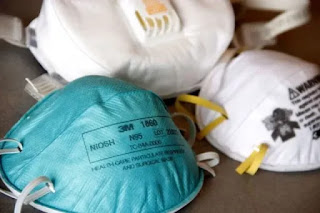
How to get N95 Masks in India - कैसे पाएं मास्क? Yellow, White, Blue or Black ?

कैसे पाएं मास्क? पीला, सफेद, नीला या काला? There are many colors of masks available in India of different colors. What is the difference ? W...