Showing posts with label mesothelioma. Show all posts

Friday, May 29, 2015

Paul Kraus from Austria and Barry Knowles from Australia - longest survivors of mesothelioma


Paul Kraus and Barry Knowles are not the only long-term survivors of malignant mesothelioma. There are some people who survive beyond all odds for quite a while. Most of their survival seems to be due to a better immune system conditioning. Some used alternative or complementary therapies (under guidance from licensed clinicians) in addition to the chemotherapy, while others participated in clinical trials of immune therapy.

Paul Krauss from Austria


Paul Krauss from Austria has written a book on surviving mesothelioma called "SURVIVING MESOTHELIOMA: A PATIENT’S GUIDE" In 1997, Kraus was diagnosed with mesothelioma, a type of cancer caused by asbestos.  Despite his "terminal" diagnosis Kraus is considered to be the longest known mesothelioma survivor in the world. Today, Kraus is a well known Australian author and cancer survivor whose writings focus on Australia, health, and spiritualism. His book Surviving Mesothelioma and Other Cancers: A Patient’s Guide is a best-selling book on the subject.
Get your free hard copy snail-mailed to you today.

Barry Knowles from Perth, Australia

Barry Knowles from Perth, Australia also wrote a book of his experience of surviving the cancer called " Reflections through Reality"

Immigrating to Western Australia with his family in 1952 as a ten-pound Pom, Barry Knowles was fourteen when he took up an apprenticeship as a carpenter and joiner.

His skills and his honest, hardworking approach made Barry a respected and valued member of the WA building industry until his retirement in 2007 – but Barry paid the ultimate price.  Diagnosed with mesothelioma in 2010 and given six months to live, Barry Knowles has defied the odds and now, with the support of his wife, he shares their darkest hours.

Barry’s despair gives way to hope as he discovers a new purpose and a deeper determination founded on his faith, and buoyed by the love of those around him.

$86M worth of Armstrong stock sold by Asbestos Personal Injury Settlement Trust

The Asbestos Personal Injury Settlement Trust was created when Armstrong World Industries emerged from a bankruptcy reorganization in 2006. It takes care of asbestos related lawsuits and claims against Lancaster-based Armstrong, which had asbestos in insulation it stopped selling in 1969. Asbestos is now banned due to its association with asbestosis and mesothelioma.

Armstrong World Industries, Inc. is a Pennsylvania corporation incorporated in 1891. Created in Pittsburgh in 1860, the company originally made wine bottle corks. By the 1890s, Armstrong World Industries was the world’s largest cork company and leveraged its size and success to expand its product line. Armstrong soon made insulating corkboard, fiberboard and other similar products. It also began a linoleum flooring business, which led to the production of vinyl and other flooring materials. Although this 20th century growth was profitable for Armstrong, use of asbestos in its products eventually led to its bankruptcy filing in 2000. They filed for bankruptcy in December 6, 2000, and reorganized on August 18, 2006. Armstrong is a designer and manufacturer of floors and ceilings. Based in Lancaster, Pennsylvania, Armstrong operates 32 plants in eight countries and has approximately 8,500 employees worldwide.

The trust has a value of over $2 million when it was established in 2006. The corporation had approximately $2.9 billion in revenue in 2011 and is the world’s largest manufacturer of hardwood flooring.

Armstrong’s asbestos-related court battles began in the 1970 landmark case of Borel v. Fibreboard Paper Products Corporation. Clarence Borel sued Armstrong and 10 other manufacturers of asbestos insulation after developing an asbestos-related disease following his many years of working with their products. This was the first case that recognized it was a manufacturer’s duty to warn of asbestos dangers and the case became the foundation for all future asbestos claims.

Over the next few decades, thousands of new asbestos claims were brought against Armstrong and the company paid millions of dollars as courts ruled they knowingly disregarded the health of its employees and consumers by using asbestos in its products.

Miller v. Armstrong World Industries, Inc., decided based on Colorado law in 1991, turned into a precedent-setting case for asbestos litigation. Raymond Miller was an insulator from 1946 to 1951 and knowingly handled asbestos products from Armstrong, but he did not know asbestos was dangerous. In his claim, he said he learned of the dangers in the 1970s while reading about asbestos. Miller developed asbestosis. Armstrong's summary judgment victory was overturned on appeal.

The case set precedent under Colorado law because it held that discovery of an initial asbestos-related disease did not trigger the running of Colorado's statute of limitations on a separate disease that manifested later. In this case, for example, the discovery of asbestosis-related pleural thickening did not trigger the two-year statute of limitations that would have prevented Miller from filing an asbestosis claim.

By 2000, the cost of asbestos litigation forced the company into bankruptcy. As part of their emergence from bankruptcy and reorganization in 2006, Armstrong established the Armstrong World Industries Asbestos Trust, which was intended to settle all current and future asbestos-related claims. In its first two years, the trust received more than 200,000 claims.

UK study of mesothelioma patients in England, Wales finds variation in treatment and survival

A new study on survival of mesothelioma patients entitled "Demographics, management and survival of patients with malignant pleural mesothelioma in the National Lung Cancer Audit in England and Wales" has been published in the Lung Cancer journal.

http://dx.doi.org/10.1016/j.lungcan.2015.03.005

It was quite a large study, with 8740 cases of mesothelioma from the UK National Lung Cancer Audit. That is quite a large sample size to draw the conclusions that they drew with a good confidence interval.

It details the difference in survival of a specific lung cancer(Malignant Pleural Mesothelioma) patients in England and Wales. Of the 8,740 mesothelioma patients studied, 87 percent received a definitive diagnosis based on advanced histo-cytological test results. Only 67 percent receive anti-cancer treatment. The types of treatments used tended to reflect the findings of the most recently published mesothelioma trials; use of chemotherapy appeared to be on the rise from year to year while use of radical surgery appeared to decline.

The overall median survival among all the mesothelioma patients studied was 9.5 months with a 1 year survival rate of 41.4% and a 3 year survival rate of 12%. Median survival had improved by about a month between patients treated in 2008 and those treated in 2012. As has been the case in previous mesothelioma studies, survival was closely linked to PS and histological subtype. However, there was a significant range in the median survival rates between various cancer centers – from 209 days to 349.


The BBC had just released news of probable exposure of 30,000 London Metropolitan Police Officers to asbestos, the causative agent for mesothelioma, during their firearms training since 1980.


Even though newer medications are being tried, like Defactinib and VS-5584, treatment of mesothelioma has poor survival and high costs. Workplace exposure to asbestos is the most common cause of mesothelioma and victims are eligible for compensation. A good mesothelioma lawyer with adequate documents can get enormous compensation for the victims of this cancer. The UK government has also made 2 schemes available for thos mesothelioma victims who do not have proof of workplace exposure or do not want to sue. The Diffuse Mesothelioma Payment Scheme was started in UK in 2014 and it is better than the older 2008 scheme.


International Mesothelioma Program (IMP) studies Defactinib clinical trials for treatment

The drug, Defactinib, is a focal adhesion kinase (FAK), which works by inhibiting the proliferation of cancer stem cells. It can thus disrupt several downstream signal transduction pathways, ergo stopping tumor cell migration, proliferation and survival. Defactinib is currently proven to be beneficial for ovarian cancer patients and is expected to be beneficial in mesothelioma too.


The International Mesothelioma Program (IMP) is based in Brigham and Women’s Hospital, Boston, Massachusetts. The specialists at the International Mesothelioma Program bring more than 20 years of clinical and research experience into focus to achieve one goal – providing quality life extension leading to a cure. Their team includes surgeons, medical oncologists, radiation oncologists, anesthesiologists, pathologists, intensivists, nurses, physician assistants, pharmacists, social workers, chaplains, nutritionists, physical therapists, respiratory therapists, psychologists, and other clinicians.


Another drug in trials for Mesothelioma is VS-5584(journal article), a novel and highly selective PI3K/mTOR kinase inhibitor. It was recently given FDA approval as an orphan drug. These are drugs which are expensive to develop and required by few patients, so they are given special funding and status byu the government. The designation often helps the development of experimental drugs for rare cancers by giving the manufacturer exclusivity for an extended period and critical tax credits.

Mesothelioma awareness Ribbon


Metropolitan police officers in UK in asbestos alert - Diffuse Mesothelioma Payment Scheme

Mesothelioma is a type of lung cancer which is very rare. But it has been found to be associated with a long duration of exposure to asbestos. Asbestos is a building material which was used earlier for roofing and has since been banned due to the association with asbestosis and lung cancers like squamous cell carcinoma and mesothelioma.

Mesothelioma sufferers are eligible for compensation from the UK govt scheme DMPS


The London metropolitan police have now, in May 2015, been found to be at risk of asbestos exposure. According to the BBC, around 30,000 metropolitan police might have come into contact. with asbestos during firearms training between 1980 and 2007.

The Independent UK, also quoted Chief Superintendent Mike Gallagher, from the Specialist Firearms Command, saying, “Clearly this is not just an issue affecting the Met, with asbestos present in many industrial and residential properties built prior to 2000."


Mesothelioma usually develops after around 10 to 20 years of exposure to asbestos, so this is about time for symptoms to develop for those who might have been exposed.

What are the symptoms of mesothelioma ?

  • Symptoms of pleural mesothelioma (mesothelioma of the chest) includes:
    • Pain in the side of the chest or lower back
    • Shortness of breath
    • Cough
    • Fever
    • Excessive sweating
    • Fatigue
    • Weight loss (without trying)
    • Trouble swallowing (feeling like food gets stuck)
    • Hoarseness
    • Swelling of the face and arms

  • Symptoms of peritoneal mesothelioma includes:
    • Abdominal (belly) pain
    • Swelling or fluid in the abdomen
    • Weight loss (without trying)
    • Nausea and vomiting
    • Constipation
These symptoms can be caused by mesothelioma, but more often they are caused by other conditions. Still, if you have any of these problems (especially if you have been exposed to asbestos), it’s important to see your doctor right away so the cause can be found and treated, if needed.


Compensation for mesothelioma in UK


The British Broadcasting Corporation also recently mentioned that victims of mesothelioma are to receive an average of £123,000 compensation from a newly created fund. Those diagnosed with this cancer after July 2012 and who cannot sue former employers as they have become bankrupt or insurance details have disappeared are eligible.

What is the Diffuse Mesothelioma Payment Scheme ?

The so called Diffuse Mesothelioma Payment Scheme is for diagnosed patients of mesothelioma in the UK who can’t find the employer responsible for their contact with asbestos, or their insurer.

Those under the 2008 scheme are eligible for a single payment according to the age at which their mesothelioma was diagnosed.

The newer DMPS pays more, and the amount depends on the details of your mesothelioma. You can claim from DMPS even if you were paid under the old 2008 scheme earlier.

According to the UK government website,

Diffuse Mesothelioma Payment Scheme (DMPS)
You may be able to claim if all of the following apply:
  • you were diagnosed with diffuse mesothelioma on or after 25 July 2012
  • your mesothelioma was caused by exposure to asbestos when working in the UK
  • you can’t trace the employer that exposed you to asbestos, or their insurers
  • you haven’t made a civil claim against any employer or insurer
  • you haven’t received damages or a specified payment for mesothelioma and you’re not eligible to a specified payment
You may also be able to claim if you were the dependant of a sufferer who has died.
You can claim for DMPS even if you have already claimed from the 2008 scheme or under the 1979 Pneumoconiosis Act. If you’ve already got a payment from the 2008 scheme or the Pneumoconiosis Act, it will be deducted from the amount you get from DMPS.
You may still be able to claim from the 2008 scheme even if you are unsuccessful in your DMPS claim.
You can check the eligibility of a patient to apply for the UK Mesothelioma scheme here.


You can apply online at the DMPS website.

You’ll need:


  • your National Insurance number
  • your full employment history, with evidence - eg P60s
  • evidence of unsuccessful attempts to trace your employer or insurers
  • the date of your diagnosis
  • evidence of diagnosis
  • details of any previous claims
  • a witness statement

Contact Gallagher Basset for more information on the DMPS and how to apply.

Gallagher Basset
DMPS@gbtpa.com
Telephone: 0131 331 9090
Find out about call charges

PO Box 17405
Edinburgh
EH12 1FX

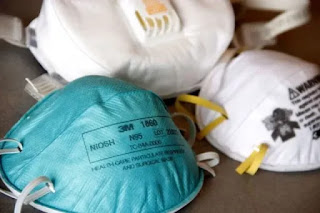
How to get N95 Masks in India - कैसे पाएं मास्क? Yellow, White, Blue or Black ?

कैसे पाएं मास्क? पीला, सफेद, नीला या काला? There are many colors of masks available in India of different colors. What is the difference ? W...