Showing posts with label nature. Show all posts

Tuesday, July 21, 2015

Unicellular Eye found in a Dinoflagellate Warnowiid - iCell

In an article/letter published in the Journal "Nature" on July 1st, 2015(paywalled), Gregory S. Gavelis, Shiho Hayakawa, Richard A. White III, Takashi Gojobori, Curtis A. Suttle, Patrick J. Keeling & Brian S. Leander explain that they found a single celled eye in the already complex unicellular Warnowiid Dinoflagellate.

Warnowiid Dinofalgellates are plankton have been previously been studied for their highly elaborate ultrastructural systems: pistons, nematocysts, and ocelloids in a single celled eukaryote. (free full text)

But that is nothing compared to the complexity of an eye. The human eye is very complicated, but the octopus eye is even more so, and more efficient. Come to think of it, Octopi can actually sense light with their skin !

Single celled organism with an EYE (Ocelloid)

This Dinoflagellate Warnowiid is a single-celled sea orgaism that has fashioned itself an eye with a basic lens, cornea and retina. That is incredibly complex for a single cell.

In fact, the ‘ocelloid’ within the planktonic predator looks so much like a complex eye that it was originally mistaken for the eye of an animal that the plankton had eaten.

The warnowiid is found off the coast of Canada and Japan, but only in tiny numbers. Researchers first stumbled across one more than a century ago, but studying the creature proved difficult because it rapidly disintegrates after being taken out of seawater.

To catch his own warnowiid, Gregory S. Gavelis searched seawater samples under a microscope for a year. When he eventually found one he froze it in plastic resin, preserving it like a fly trapped in amber. He then made a 3-D model by taking snapshots of the warnowiid under an electron microscope – and was stunned by what he saw.

While other single-celled creatures can detect light using “eyespots” – simple structures that allow an organism to tell dark from light – the warnowiid seemed to have repurposed its internal organelles to form what resembled the lens, cornea, iris and retina of a complex eye.

The “cornea”, for example – the transparent outer layer at the front of the eye – was made of mitochondria, the bits of the cell normally responsible for energy production. The mitochondria in the warnowiid interlocked to form a sheet-like layer around the lens, curved to concentrate incoming light on to the “retina”.

(Left : Electomicrograph Right :Schematic ) of the Eye of the Warnowiid


The light-sensing “retina” at the back of the eye was made up of plastids, structures normally involved in photosynthesis. The team extracted genetic material from inside the plastids and found it rich in algal DNA. The team suspects that at some point during evolution, a warnowiid ancestor gobbled up some algae and adopted its photosynthetic equipment. When the organism later abandoned photosynthesis for the predatory life, it repurposed its light-capturing plastids into a light-sensing organ.

What is the Warnowiid Eye used for ?

It is not clear how warnowiids use their “eye”, but the authors believe they’re used to hunt. Warnowiids spiral through the water as they swim and Gavelis thinks the eye lets them see flashes of light as it bounces off the single-celled organisms that are their prey. The lens likely concentrates incoming light to increase sensitivity – rather than projecting an image as our own eye does.

Friday, July 17, 2015

How to identify a flower from a photo - Pokedex for flowers

Previously, I had written about how to identify a bird from a photo or its birdcall. It was in its early stages and could not identify birds well enough.

This time around, let us tackle a simpler problem.

How to identify a flower or plant from a photo ?

There's of course an app for that. Dozens of apps for that actually. And many of them are paid apps too. And a few free ones.

Well, let us first see the websites that allow us to freely identify a flower from a photo.

A comprehensive state-by-state flower identification guide.An essential website is the USDA Natural Resources Conservation Service Plants Database.  This huge database includes a search function utilizing a common name or scientific name, photos and illustrations, geographic distribution maps, and links to other resources with even more information about a specific plant.
An appendix of invasive alien plants.
NewEngland Wild's Simple Key
An interactive flower identification tool.
Helps to identify plants from the garden
An interactive guide to known flower characteristics.
Pick the best plants for your garden.
Check out an inventory of vegetation throughout US National Parks.
Enter habitat and growth information for flower identification in Washington.
Learn how to distinguish plants by their leaves.
Photos and descriptions to help with aquatic plant identification.
A lesson plan to help children with flower identification.
Learn to identify aquatic species in Indiana.
Identify wildflowers by family, color, or leaves.
Identify and learn to care for house plants.
A comprehensive flower identification tool for this region.

Diphelleia grayi is the Skeleton Flower that turns transparent when it rains

Diphelleia grayi(scientific name), more commonly known as the Skeleton Flower, can be found in only three parts of the world. The plant grows on moist, wooded mountainsides in colder regions of Japan, China and the Appalachian Mountains in the United States, and is instantly recognizable by its large, umbrella-like leaves.


When the the leaves dry out, they turn back to being white.


Diphylleia grayi is a little-known relative of the more popular mayapple (podophyllum) and fairy wing (epimedium). Diphylleia grayi is native to moist wooded mountainsides in colder regions of China and Japan, where you'll find the large fuzzy green, umbrella-like, bold foliage topped by small clusters of white, may apple-like flowers in late spring. In late summer, the stalks of eye-catching cobalt blue fruit replace the faded flowers. Diphylleia grayi does not like hot summer temperatures, so plant it where in a cool moist woodland site.

Friday, May 29, 2015

Kuchinoerabu island in Japan evacuated after Mount Shindake volcano erupts


Click HERE to read this article in Japanese
日本でこの記事を読むには、ここをクリック


Today, on Friday, 29th March, 2015, Mount Shindake on Kuchinoerabu island suddenly erupted.
TV footage captured the moment Mount Shindake exploded, sending columns of thick, black smoke high into the air. Mount Shindake, located about 650 metres above sea level, erupted in August 2014 for the first time since 1980.

Japan’s meteorological agency raised the alert level to five – the highest on its scale – and ordered the island’s 140 residents to evacuate.

The agency said no injuries or damage had been reported following the eruption, which occurred eight months after 57 people died after Mount Ontake in central Japan erupted without warning.

Pyroclastic flows, dense currents of rock fragments and hot gases from the volcano had reached the island’s north-west shore.

Shindake Volcano eruption

In Tokyo, the prime minister, Shinzo Abe, set up an emergency response team and dispatched a self-defence forces to the island. Abe said he had instructed local authorities to do “everything possible” to ensure the islanders’ safety.

Yoshihide Suga, the government’s chief spokesman, said a coast guard vessel had also been sent to help residents evacuate.
Photo taken from the neighboring island of Yakushima by Itaru Takaku

Kuchinoerabu island is located about 80km (50 miles) south-west of the main island of Kyushu, and can be reached only by a once-a-day ferry from Yakushima island, 19km (12 miles) to the east.

Friday, May 15, 2015

Warm blooded fish found - Opah Moonfish - warm bodies !

The Opah (or Moonfish) known to scientists by its latin name Lampris guttatus, was recently discovered to be the first known warm blooded fish.  According to a study published yesterday in Science(the journal), researchers found a counter-current heat exchange mechanism in its gill system.


Fish are usually cold blooded creatures.
But in Opah, it seems the deoxygenated, warm blood going away from the body to the gills passes through vessels in close apposition with the vessels carrying the freshly oxygenated relatively cooler blood coming from the gills to the body. Thus the blood coing to the body is warmed up a bit.

To confirm that these special gills helped the opah stay warm, the researchers tagged a number of moonfish with temperature monitors and tracked the fish as they dove. The fish spend most of their time at least 150 feet (45 m) below the ocean surface. However deep they dived, their body temperature stayed about 9 degrees Fahrenheit (5 degrees Celsius) warmer than the surrounding water. Fat deposits around the gills and muscles helped insulate the fish.


"Increased temperature speeds up physiological processes within the body," study leader Nicholas Wegner, a biologist at the National Oceanic and Atmospheric Administration (NOAA) Fisheries' Southwest Fisheries Science Center in La Jolla, California, told Live Science. "As a result, the muscles can contract faster, the temporal resolution of the eye is increased, and neurological transmissions are sped up. This results in faster swimming speeds, better vision and faster response times."
The result, Wegner said, is a fast-swimming fish with an advantage for hunting slow, cold-blooded prey.

“It’s a remarkable adaptation for a fish,” says Diego Bernal, a fish physiologist at the University of Massachusetts, Dartmouth, who was not involved in the study. Having a warm heart and brain likely allows the little-known fish to be a vigorous predator, the researchers suspect.
Water will take the heat right out of most creatures. So fish typically remain the temperature of the water they swim in. And that, in turn, limits their biological functions in colder water, especially cardiovascular endurance. There are partial exceptions: Tuna, billfish, and some sharks can temporarily raise the temperature of their body muscles while they hunt, but they must return to warmer waters to bring their core temperature back to normal.
The opah (Lampris guttatus) doesn’t look like a fierce predator. This tubby fish, about a meter long, swims by flapping its pectoral fins. It lives in oceans around the world, but little is known about its biology. It hunts squid and fish, typically 50 m to 200 m below the surface, where the water is just 10°C and colder. In 2012, Owyn Snodgrass, a fisheries biologist with the National Oceanic and Atmospheric Administration in San Diego, California, caught some opah off the coast of California as part of a regular survey. He offered the gills to his colleague Nicholas Wegner, a fish physiologist. “I’m kind of known as the gill guy,” Wegner says.

The gills sat in a nearly 20-liter plastic bucket of preservative for a few months before Wegner pulled them out for a look. “I noticed right away that there was something unique,” he recalls. Fish have just a few large blood vessels that bring blood to and from the gills, where tiny vessels pick up oxygen from the water. But the opah has an elaborate network of tiny blood vessels, in which arteries lie next to veins in tightly packed arrays.
This arrangement of paired arteries and veins is known as a rete mirabile, or “wonderful net,” and often functions as a countercurrent heat exchanger in other species. Vessels carrying warm blood transfer its heat to the cold blood in vessels that comes back from the extremities.  This anatomical trick helps aquatic birds minimize heat loss when their feet are in cold water; some whales have similar heat exchangers in their tongues. Tuna, billfish, and certain sharks use this rete mirabile to keep their muscles warm.
The opah is the first fish discovered with a rete mirabile around its gills. The gills’ heat exchanger is wrapped in a centimeter-thick layer of fat, which is unusual in fish. Presumably, it’s used for insulation.
Wegner, Snodgrass, and colleagues decided to measure the temperature of opah at sea. After hauling the fish aboard, they found that the average body temperature was roughly 5°C warmer than the water from which they were caught, as they report online today in Science.
The researchers also measured the muscle temperature in living fish as they swam. To do this, they caught opah using a hook and line, implanted a temperature monitor into the pectoral muscles, and let them swim for a few hours while still attached to the fishing gear. Even after the fish dove to 4°C water, the muscles remained about 13°C to 14°C.
The higher body temperature should provide several advantages, including more powerful swimming and better endurance, thanks to the warm heart. As other researchers reported in 2009, the brain and eyes of the opah are even warmer than the rest of the body, thanks to a small countercurrent heat exchanger at the base of its skull. The blood flowing to the eyes is warmed by specialized eye muscles that generate heat without contracting, a feature found only in fish.
Altogether, the evidence makes Wegner suspect that the opah is an active predator, unlike the other resident predators that tend to ambush prey. With acute vision, fast response times, and endurance, opah can pursue squid and fast fish called barracudinas.
Wegner and his colleagues have been gathering behavioral data on free-swimming opah by using sensors that pop off and float to the surface after 2 days. But much remains to be learned about this mysterious warm-blooded creature that has mastered the chilly depths. “It just goes to show how fish can adapt in amazing ways,” Wegner says.

Philips AC4014 30-Watt Air Purifier review in India

Philips 30-Watt Air Purifier


What does an air purifier do ? Do you really need it ?

Air pollution is a major problem in India and household air is also polluted.

Delhi’s severely high pollution levels during the winter months drives it to India’s worst annual air quality levels, but on individual days, several Indian cities often experience worse air quality. For the first week of April, for example, the urban area with the worst air quality of 17 locations analysed by The Hindu was the BTM Layout region of south Bangalore. The new National Air Quality Index gives current as well as 24-hour average data on particulate matter – PM2.5 or very fine particles smaller than 2.5 micrometres in diameter, and PM 10 which are less than 10 micrometers in diameter – as well as other pollutants including nitrogen dioxide, ozone and carbon monoxide. PM 2.5 levels are commonly used as the best indicator of severe air pollution, while PM 10 particles are also a cause of public health concern, but less lethal. India now grades air quality along a colour-coded chart based on pollutant levels.


Using data from the new Index, as well as data from the Central Pollution Control Board (CPCB) and state pollution control boards, The Hindu found that Bangalore’s BTM Layout area has had only one “moderate” air quality day in the last ten days, while all the rest were “poor” or “very poor”. Other parts of the city did far better.Delhi, the focus of global attention for its consistently poor air quality, on the other hand, had “moderate” air quality over the first week of April for the three monitoring stations for which PM 2.5 was available - Dilshad Gardens, Dwarka and Shadipur. Dwarka was the only location with more “poor” or “very poor” days than “good” or “satisfactory” ones.

So, if you need good health, then it is better to have an air purifier in India.
This particular Philips air purifier is one of those available on Amazon India.

Features are :
  • Material: ABS Plastic
  • Advanced filtration system and smart sensor
  • Healthy air protect alert
  • 3-step light indicators clearly show air quality level
  • 3-step fan speed lets you to adjust air flow to your liking
  • 1 or 4 or 8 hours easy-to-set timer
  • Warranty: 2 years on product

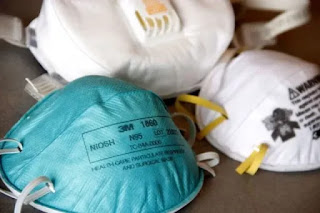
How to get N95 Masks in India - कैसे पाएं मास्क? Yellow, White, Blue or Black ?

कैसे पाएं मास्क? पीला, सफेद, नीला या काला? There are many colors of masks available in India of different colors. What is the difference ? W...