Showing posts with label food. Show all posts

Friday, June 26, 2015

How to make homemade Nutella chocolate breadspread - and other Nutella recipes

Nutella is a brand of chocolate breadspread which is very tasty and similar to other chocolate breadspreads like Chocomate.

Stop eating Nutella and save the forests, urges French ecology minister
Ségolène Royal says Nutella is made using palm oil, which is contributing to deforestation, and urged Ferrero to make the spread with ‘other ingredients’

Today, you can learn how to make Nutella chocolate spread yourself at home.
  The steps are shown in the quick video above.

If you want written instructions, here they are :

Ingredients

  • 2.5 oz (about 2/3 cups) roasted unsalted hazelnuts
  • 3/4 cup sweetened condensed milk
  • 3 oz (about 1/2 cup) unsweetened chocolate, finely chopped
  • 3 tbsp honey, agave nectar, or other liquid sweetener
  • a food processor


In SI units,
  • For 100g of roasted hazelnuts, 
  • use 30g of dark chocolate (70% cocoa) 
  • 30g of milk chocolate (35% cocoa), 
  • 50g of powdered sugar and 
  • 10g of cocoa powder

The first step is to toast the hazelnuts. If you use the roasted unsalted hazelnuts from Oh Nuts, they technically don’t need to be toasted, but I think toasting nuts, even pre-roasted ones, adds a depth of flavor that’s important to the finished product.
So place your nuts in a preheated 350 degree oven, and toast them until they’re brown and fragrant, about 10-12 minutes. Be sure to stir them every 3-4 minutes to keep them from burning. Once they’re toasted, set them aside until they’re no longer hot.

The food processor is going to do most of the work in this recipe, so prepare yourself for a lot of food processor pictures. Start by adding the cooled, toasted hazelnuts to the processor bowl.

Thursday, June 04, 2015

Eat, Chew, Live: 4 Revolutionary Ideas to Prevent and Reverse Diabetes, Lose Weight and Enjoy Food


Diabetes Mellitus is a fast growing non-communicable disease which is rapidly spreading across the world with no cure, but only control measures. The process of type 1 diabetes is fairly well understood. But Type 2 Diabetes has always been a mystery. Several theories have tried to ecplain why it develops and failed to find a way to prevent it or cure it. The classical theory of insulin resistance was an explanation given because no proper explanation had been found.


Dr John Poothulil describes a revolutionary new theory about how type 2 diabetes mellitus(Non Insulin Dependent Diabetes in this book called "Eat, Chew Live". He tells us that How we eat matters more than What we eat. He explains why the classical theory of developing "insulin resistance" is incomplete and why the process that masquerades as insulin resistance actually develops. He suggests how to eat your favorite foods without growing fat and developing diabetes. He advises on how diabetics and pre-diabetics should plan their meals and food to reduce the need for diabetic medications and in some cases eliminate the need for any medication to control their diabetes'

The book gives explanations with color pictures explaining the process of food digestion, absorption and how the body comes to develop type 2 diabetes.

Diabetes is among the fastest growing diseases in the world. In the U.S. 1 in 3 adults over age 20 has high blood sugar and 1 in 4 adults over age 65 is fully diabetic. Yet, nearly every single person could avoid high blood and diabetes if they understood its real cause―and Eat, Chew, Live provides exactly the new science & powerful inspiration to help people prevent this serious disease from altering their lives―without drugs. Eat, Chew, Live offers a revolutionary new science-based explanation of what really happens in the body to cause high blood sugar. 

While traditional medicine blames the condition on “insulin resistance,” Dr. Poothullil disagrees, offering systematic proof of a far better biological explanation for it. According to him, diabetes is not a hormonal disease; in fact, he demonstrates that insulin resistance is not even logical. Instead, high blood sugar and diabetes are the result of overconsumption, especially of grain-based carbohydrates that cause a normal bodily metabolism--cells burning fatty acids rather than glucose--to go haywire. When people understand this insight, everything about preventing high blood sugar and diabetes becomes clear. Eat, Chew, Live goes on to present three other revolutionary ideas to help people get in tune with their body’s need for nutrition, their hunger and satisfaction signals, and the causes of their overeating. 
Dr John Poothulil, author of Eat Chew Live

Dr. Poothullil’s offers insightful and persuasive advice about why avoiding complex carbohydrates―even “whole grain” and “gluten free” -- is the key to losing weight and preventing high blood sugar. He goes on to teach readers how to eat mindfully, chewing fully to enjoy and savor food. Many readers report that the book helped them lose weight, get in touch with their body, and reduce their diabetes medications significantly. Eat, Chew, Live is unlike other books on diabetes, as nearly every one accepts insulin resistance as the cause. Dr. Poothullil theory is a medically sound new approach to explaining high blood sugar―and the implications are enormous for the entire medical approach to treating high blood sugar with medications rather than teaching people “how to eat what they enjoy to lower blood sugar.” Eat, Chew, Live may be one of the most important health books of the decade, as its 4 revolutionary ideas will save many lives. Eat, Chew, Live has over 30 illustrations and 2 storyboards to explain the science visually. The entire book is printed in color.


Tuesday, June 02, 2015

Nestle says Maggi safe, Delhi says Maggi unsafe, Kerala withdraws Maggi, Celebrities in trouble

The Maggi noodles issue has been kicking up a storm in India.
Initially, last week the Uttar Pradesh FDA first said that there was excessive lead and monosodium glutamate in Maggi. Soon news came that they had issued a ban on Maggi.

Later the news came that there was no ban on Maggi and it was just a rumour.
Nestle says Maggi is safe, goverment says NOT

Another report said that Maharashtra FDA has also taken Maggi samples to test.

Although the food and drug administration (FDA) of Uttar Pradesh has claimed that the content of lead and monosodium glutamate (MSG) in a batch of ready-to-cook Maggi was high, the Maharashtra state unit of the FDA plans to verify the claims, before taking a drastic step such as recalling the product from the market.
“We have collected samples of the product from different parts of the state such as Pune, Nagpur and Mumbai and have sent them to our laboratory for tests. The results will come in a couple of days, after which we will decide if there is a need to take action,” said Dr Harshdeep Kamble, state FDA commissioner.
According to Nestle India, on April 30, the local authorities in Lucknow asked them to recall one batch of Maggi Noodles (around 200,000 packs) which were manufactured in February 2014 and had crossed the expiry date in November 2014.
The company, in a press statement, said, “Nestlé India’s current practice is to collect stock that is near the best before date from distributors/retailers, so we are confident that these packs are no longer in the market. The company does not agree with the order and is filing the requisite representations with the authorities.”

Then came the issue of celebrities who endorsed Maggi earlier being told there will be an FIR against them.
“Any brand ambassador or celebrity endorsing products or services is liable for action if an advertisement is found misleading, the government said on Monday. It said celebrities like Bollywood star Madhuri Dixit and Preity Zinta are legally responsible, if the advertisements for the popular Maggi noodles were found to be misleading consumers. According to the Food Standards and Safety Authority of India (FSSAI) Act, anyone who is a party to a misleading advertisement or its publication can be fined up to Rs 10 lakh. The proposed amendments to the Consumer Protection Act also has provisions to issue direction for discontinuation of such advertisements and even reporting such violations to police or any other law enforcing agency for criminal prosecution,” says a report in the Times of India.


Nestle said that there was some lead in a packet of Maggi that had expiry date of November 2014 and that batch is not in the market anymore.

Is there lead in MAGGI Noodles?


We understand that consumers are concerned by reports that the authorities in India have found elevated levels of lead in a sample pack of MAGGI Masala Noodles. The sample came from a batch that had an expiry date of November 2014 and is therefore no longer in the market. We are fully cooperating with the authorities who are conducting further tests and we are awaiting their results.

Why is there any lead at all in MAGGI Noodles?

Trace amounts of lead are present in the atmosphere and in the soil around the world. There are firm limits prescribed by the authorities to ensure that any lead detected in a finished product is well below the levels that would be unsafe. We regularly monitor all our raw materials for lead, including testing by accredited laboratories. These tests have consistently shown levels in MAGGI Noodles to be within permissible limits. As well as testing both raw materials and finished products for lead we also carry out extensive research and contribute to global efforts to assure safety in this area. We are committed to continuing to improve the quality of agricultural materials across the food chain working with farmers, suppliers, authorities and the rest of the food industry to ensure food safety.


Monday, June 01, 2015

How to make Lego Jello with tips on getting clear bubble-less Jello


The king of random explains how to make the perfect Lego Jelly. Of course, you'll need a Lego Jelly/Ice mould or make one with silicone.

These Lego bricks toys are very well loved by kids everywhere and never go out of fashion.


There are even chocolate legos. 
Edible chocolate legos

Monday, May 18, 2015

Does Maggi or Ramen noodles contain Monosodium Glutamate or Lead ?


Update :

There was a news report saying Maggi was recalled in UP
Later another report said there was no recall yet
Another report now says Maharashtra FDA has just collected Maggi samples from 3 cities

Maggi noodles is a brand of instant noodles manufactured by Nestlé. The brand is popular in Australia, India, South Africa, Brazil, New Zealand, Brunei, Malaysia, Singapore, Sri Lanka, Bangladesh, Fiji and the Philippines. In several countries, it is also known as “maggi mee” (mee is Indonesian/Malay/Hokkien for noodles). Maggi noodles are part of the Maggi family, a Nestlé brand of instant soups, stocks, and noodles.


A recent news article mentioned that Maggi was tested at Kotkata's referral laboratory(in India) and found to have Monosodium Glutamate(MSG) and lead in excess of permissible limits.
These samples were collected in some parts of Uttar Pradesh and were found containing added monosodium glutamate (MSG) and lead in excess of the permissible limit, official sources said.

The Lucknow Food Safety and Drug Administration has initiated inquiry and written to the Food Safety and Standards Authority of India (FSSAI) in New Delhi seeking to cancel the licence for Maggi. The state regulator has also asked FSSAI to order sampling of the product from across the country to check quality.

Nestle, the company which manufactures Maggi, has vehemently denied the claims. "We do not add MSG to MAGGI Noodles and glutamate, if present, may come from naturally occurring sources. Food regulators in India also do not specify any limit for the presence of MSG / Glutamate," a Nestle spokesperson said. He said, "We are surprised with the lead content supposedly found in the sample. We monitor the lead content regularly as part of regulatory requirements, and tests at our own accredited laboratories as well as those by independent external accredited laboratories have consistently shown the results to be well within the permissible limit."

According to Yadav, test results showed Maggi containing 17 parts per million lead, whereas the permissible limit is 0.01ppm. Nestle says its records show lead content is negligible and less than 1 % of the fixed limit.

MSG, What is it?

Monosodium glutamate, also known as sodium glutamate or MSG, is the sodium salt of glutamic acid, one of the most abundant naturally occurring non-essential amino acids Monosodium Glutamate, better known as MSG, is a form of concentrated salt added to foods to enhance the flavor. This salt version of glutamic acid is an amino acid the body can produce on its own, but the MSG we find on store shelves is processed and comes from fermented sugar beets. Because this kind of MSG is processed, it can cause many adverse reactions, including skin rashes, itching, hives, nausea, vomiting, migraine headaches, asthma, heart irregularities, depression and even seizures
Since MSG acquired its infamous reputation for causing migraines, the food industry has given it new names and new forms, including autolyzed yeast, yeast extract, maltodextrin, hydrolyzed protein, sodium caseinate, mono-potassium glutamate, and textured protein.

What makes Maggi taste sooooo good ??

Wow, Maggi we love so much is also healthy! Or is it??

One serving (1 block or 100 grams) of noodles contains 1170 mg. of sodium chloride aka salt, almost half of the USDA 2400 mg maximum.

Most of the salt would be in the seasoning packet, but the noodles probably contain some salt also.
The noodles provide 10% of your daily calcium and 12% of your daily iron requirement. Other than that the Maggi brand noodles have no nutritional benefit.

All packaged and take out or restaurant foods have added salt, so I certainly wouldn’t eat these noodles on a regular basis due to the very high salt content

Lead is toxic, we shall wait for repeat test results before trying Maggi again.

The Maggi issue has blown up into epic proportions wit every aspect of t being explored in the media including social media. READ ON !

Friday, April 27, 2007

Tastes like Badam milk spirit !


The one on the left is probably adulterated. I got them from the same canteen, drank half of the one on the left before I realised it tasted bad, really bad. Yuck !!!!

First I thought maybe it was something I ate, then I went to the canteen counter and saw that this one was different. white coloured instead of the usual creamish.

That is Badam milk byt the way.

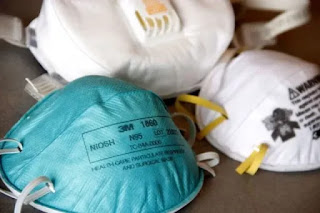
How to get N95 Masks in India - कैसे पाएं मास्क? Yellow, White, Blue or Black ?

कैसे पाएं मास्क? पीला, सफेद, नीला या काला? There are many colors of masks available in India of different colors. What is the difference ? W...