Showing posts with label amazing. Show all posts

Tuesday, July 21, 2015

Unicellular Eye found in a Dinoflagellate Warnowiid - iCell

In an article/letter published in the Journal "Nature" on July 1st, 2015(paywalled), Gregory S. Gavelis, Shiho Hayakawa, Richard A. White III, Takashi Gojobori, Curtis A. Suttle, Patrick J. Keeling & Brian S. Leander explain that they found a single celled eye in the already complex unicellular Warnowiid Dinoflagellate.

Warnowiid Dinofalgellates are plankton have been previously been studied for their highly elaborate ultrastructural systems: pistons, nematocysts, and ocelloids in a single celled eukaryote. (free full text)

But that is nothing compared to the complexity of an eye. The human eye is very complicated, but the octopus eye is even more so, and more efficient. Come to think of it, Octopi can actually sense light with their skin !

Single celled organism with an EYE (Ocelloid)

This Dinoflagellate Warnowiid is a single-celled sea orgaism that has fashioned itself an eye with a basic lens, cornea and retina. That is incredibly complex for a single cell.

In fact, the ‘ocelloid’ within the planktonic predator looks so much like a complex eye that it was originally mistaken for the eye of an animal that the plankton had eaten.

The warnowiid is found off the coast of Canada and Japan, but only in tiny numbers. Researchers first stumbled across one more than a century ago, but studying the creature proved difficult because it rapidly disintegrates after being taken out of seawater.

To catch his own warnowiid, Gregory S. Gavelis searched seawater samples under a microscope for a year. When he eventually found one he froze it in plastic resin, preserving it like a fly trapped in amber. He then made a 3-D model by taking snapshots of the warnowiid under an electron microscope – and was stunned by what he saw.

While other single-celled creatures can detect light using “eyespots” – simple structures that allow an organism to tell dark from light – the warnowiid seemed to have repurposed its internal organelles to form what resembled the lens, cornea, iris and retina of a complex eye.

The “cornea”, for example – the transparent outer layer at the front of the eye – was made of mitochondria, the bits of the cell normally responsible for energy production. The mitochondria in the warnowiid interlocked to form a sheet-like layer around the lens, curved to concentrate incoming light on to the “retina”.

(Left : Electomicrograph Right :Schematic ) of the Eye of the Warnowiid


The light-sensing “retina” at the back of the eye was made up of plastids, structures normally involved in photosynthesis. The team extracted genetic material from inside the plastids and found it rich in algal DNA. The team suspects that at some point during evolution, a warnowiid ancestor gobbled up some algae and adopted its photosynthetic equipment. When the organism later abandoned photosynthesis for the predatory life, it repurposed its light-capturing plastids into a light-sensing organ.

What is the Warnowiid Eye used for ?

It is not clear how warnowiids use their “eye”, but the authors believe they’re used to hunt. Warnowiids spiral through the water as they swim and Gavelis thinks the eye lets them see flashes of light as it bounces off the single-celled organisms that are their prey. The lens likely concentrates incoming light to increase sensitivity – rather than projecting an image as our own eye does.

Sunday, July 19, 2015

GIF of Aerial Mid air refuelling of a fighter jet - Super Hornet


Aerial refueling, also referred to as air refueling, in-flight refueling (IFR), air-to-air refueling (AAR), and tanking, is the process of transferring aviation fuel from one military aircraft (the tanker) to another (the receiver) during flight.

The procedure allows the receiving aircraft to remain airborne longer, extending its range or loiter time on station. A series of air refuelings can give range limited only by crew fatigue and engineering factors such as engine oil consumption. Because the receiver aircraft can be topped up with extra fuel in the air, air refueling can allow a takeoff with a greater payload which could be weapons, cargo, or personnel: the maximum takeoff weight is maintained by carrying less fuel and topping up once airborne. Alternatively, a shorter take-off roll can be achieved because take-off can be at a lighter weight before refueling once airborne. Aerial refueling has also been considered as a means to reduce fuel consumption on long distance flights greater than 3,000 nautical miles (5,600 km; 3,500 mi). Potential fuel savings in the range of 35-40% have been estimated for long haul flights (including the fuel used during the tanker missions).

The two main refueling systems are probe-and-drogue, which is simpler to adapt to existing aircraft, and the flying boom, which offers faster fuel transfer, but requires a dedicated operator station.


Usually, the aircraft providing the fuel is specially designed for the task, although refueling pods can be fitted to existing aircraft designs if the "probe-and-drogue" system is to be used. The cost of the refueling equipment on both tanker and receiver aircraft and the specialized aircraft handling of the aircraft to be refueled (very close "line astern" formation flying) has resulted in the activity only being used in military operations. There is no known regular civilian in-flight refueling activity. Originally employed shortly before World War II on a very limited scale to extend the range of British civilian transatlantic flying boats, and then after World War II on a large scale to extend the range of strategic bombers, aerial refueling since the Vietnam War has been extensively used in large-scale military operations for many different military aircraft operations. For instance, in the Gulf War and the Iraqi invasion of Kuwait and the Iraq War, all coalition air sorties were air-refueled except for a few short-range ground attack sorties in the Kuwait area.

Friday, July 17, 2015

Diphelleia grayi is the Skeleton Flower that turns transparent when it rains

Diphelleia grayi(scientific name), more commonly known as the Skeleton Flower, can be found in only three parts of the world. The plant grows on moist, wooded mountainsides in colder regions of Japan, China and the Appalachian Mountains in the United States, and is instantly recognizable by its large, umbrella-like leaves.


When the the leaves dry out, they turn back to being white.


Diphylleia grayi is a little-known relative of the more popular mayapple (podophyllum) and fairy wing (epimedium). Diphylleia grayi is native to moist wooded mountainsides in colder regions of China and Japan, where you'll find the large fuzzy green, umbrella-like, bold foliage topped by small clusters of white, may apple-like flowers in late spring. In late summer, the stalks of eye-catching cobalt blue fruit replace the faded flowers. Diphylleia grayi does not like hot summer temperatures, so plant it where in a cool moist woodland site.

Thursday, July 16, 2015

Secret magic of induction cooking - How does it work ?

Induction cookers suddenly appeared on the market a few years back and stealthily replaced all other electricity based stoves like heater coils and nichrome alloy stoves.

Induction cookers are notoriously energy efficient and safer compared to these older technologies.

So, the question is How does an Induction cooker work ?

The answer, like any magical technology is MAGNETS.
Yes, magnetic fields.

Watch this video explain how Induction cooking uses magnetic fields to concentrate energy exactly where you need it.

Bill from Edison explains :


Electrical Engineer Bill Kornrumpf describes how it works. AC power is converted to DC by a rectifier, then it is converted into high frequency AC power by an inverter. EE W.P. Kornrumpf invented better control circuitry for this and other appliances, reducing the size and amount of raw material used.


Cochlear Implant - Emotional videos of deaf people hear sound for the first time


Cochlear implants are medical marvels that help those whose inner ear is damaged beyond repair. They give a very dramatic improvement in quality of life to those deaf people who are eligible to it, meaning their inner ear is damaged but auditory cortex is unaffected.

Here are some videos :

Mother hears 8-year old son's voice for the first time


Tuesday, June 30, 2015

Xiaomi Redmi Note 4G cheapest price in India - Rs 7999/- on Amazon, Flipkart and Snapdeal

Redmi 4G Note at Rs 7999/- with additional 10% discount for Standard Chartered at SnapDeal


Xiaomi's Redmi Note 4G was always an excellent budget price phone with very good features. Good news, from today, Xiaomi has reduced the price of this phone from Rs 9,999/- to Rs 7,999/-

Ypu could also have a look at the comparison of Xiaomi Mi4i, Moto G2, and Zenfone 2.

This is applicable over Amazon , Flipkart and Snapdeal.

No need to try your luck at a flash sale like earlier - this is open to all.
And it is eligible for Cash on Delivery.

Monday, June 08, 2015

How can I identify a bird from a photo or its birdcall ?

App to identify Birds from a photo (Androis and iOS and Windows PC)


Identifying faces from photos/videos with software is a technology in intense development by both top secret spy agencies as well as social networking companies like Facebook, Google and Instagram - to name a few. They have tried to identify and tag other photos of yourself with surprising accuracy(most of the time) and sometimes with hilarious ridiculousness at times.

What about making one for animals ? Or birds ?


In the 60s, Marvin Minsky assigned a couple of undergrads to spend the summer programming a computer to use a camera to identify objects in a scene. He figured they'd have the problem solved by the end of the summer. Half a century later, we're still working on it.

XKCD had a comic mentioning the difficulty in making a software app that can identify a bird in a photo compared to how easy some other things are. To the average person, it is not immediately apparent how easy some things are and how very difficult some other things are to do in software.


How can I identify a bird from its song or birdcall - Shazam for birds ?

There is an even more awesome way to identify birds that uses the birdsong to identify the bird's tweets. There are several apps which claim to do that. And there are separate apps for different regions like the British Isles, American and Indian versions. And other like loveBirds and twigle allow you to listen to birdsongs and details on your mobile. Even Windows mobile has a version of the app. But sadly these are not free(unless you know where to look ;) .

Many good birdwatching apps are paid, but a few like Merlin(bird photo ID), BirdsEye are free.
There are a lot more ornithology apps and even more websites for avid birders out there. Join there and post photos or birdcalls if you don't get any useful info from the apps.

Thursday, June 04, 2015

Eat, Chew, Live: 4 Revolutionary Ideas to Prevent and Reverse Diabetes, Lose Weight and Enjoy Food


Diabetes Mellitus is a fast growing non-communicable disease which is rapidly spreading across the world with no cure, but only control measures. The process of type 1 diabetes is fairly well understood. But Type 2 Diabetes has always been a mystery. Several theories have tried to ecplain why it develops and failed to find a way to prevent it or cure it. The classical theory of insulin resistance was an explanation given because no proper explanation had been found.


Dr John Poothulil describes a revolutionary new theory about how type 2 diabetes mellitus(Non Insulin Dependent Diabetes in this book called "Eat, Chew Live". He tells us that How we eat matters more than What we eat. He explains why the classical theory of developing "insulin resistance" is incomplete and why the process that masquerades as insulin resistance actually develops. He suggests how to eat your favorite foods without growing fat and developing diabetes. He advises on how diabetics and pre-diabetics should plan their meals and food to reduce the need for diabetic medications and in some cases eliminate the need for any medication to control their diabetes'

The book gives explanations with color pictures explaining the process of food digestion, absorption and how the body comes to develop type 2 diabetes.

Diabetes is among the fastest growing diseases in the world. In the U.S. 1 in 3 adults over age 20 has high blood sugar and 1 in 4 adults over age 65 is fully diabetic. Yet, nearly every single person could avoid high blood and diabetes if they understood its real cause―and Eat, Chew, Live provides exactly the new science & powerful inspiration to help people prevent this serious disease from altering their lives―without drugs. Eat, Chew, Live offers a revolutionary new science-based explanation of what really happens in the body to cause high blood sugar. 

While traditional medicine blames the condition on “insulin resistance,” Dr. Poothullil disagrees, offering systematic proof of a far better biological explanation for it. According to him, diabetes is not a hormonal disease; in fact, he demonstrates that insulin resistance is not even logical. Instead, high blood sugar and diabetes are the result of overconsumption, especially of grain-based carbohydrates that cause a normal bodily metabolism--cells burning fatty acids rather than glucose--to go haywire. When people understand this insight, everything about preventing high blood sugar and diabetes becomes clear. Eat, Chew, Live goes on to present three other revolutionary ideas to help people get in tune with their body’s need for nutrition, their hunger and satisfaction signals, and the causes of their overeating. 
Dr John Poothulil, author of Eat Chew Live

Dr. Poothullil’s offers insightful and persuasive advice about why avoiding complex carbohydrates―even “whole grain” and “gluten free” -- is the key to losing weight and preventing high blood sugar. He goes on to teach readers how to eat mindfully, chewing fully to enjoy and savor food. Many readers report that the book helped them lose weight, get in touch with their body, and reduce their diabetes medications significantly. Eat, Chew, Live is unlike other books on diabetes, as nearly every one accepts insulin resistance as the cause. Dr. Poothullil theory is a medically sound new approach to explaining high blood sugar―and the implications are enormous for the entire medical approach to treating high blood sugar with medications rather than teaching people “how to eat what they enjoy to lower blood sugar.” Eat, Chew, Live may be one of the most important health books of the decade, as its 4 revolutionary ideas will save many lives. Eat, Chew, Live has over 30 illustrations and 2 storyboards to explain the science visually. The entire book is printed in color.


Wednesday, June 03, 2015

Will my GNWL/PQWL/RAC train ticket get confirmed ? Two Indian websites predict from your PNR

Travelling by train in India is a unique experience. Indian railways is one of the largest emplyers in Asia with thousands of people running the show. But the website for booking Indian train tickets is still not good enough. In fact, the current edition of the website is the best it has ever become, the earlier website was so hopelessly difficult to navigate and always slow.


Indian railways always gets overbooked and many people cancel their tickets, allowing those in the waiting list to get confirmed tickets. But playing this game of lottery to get tickets is not an option for most people.

Here are two websites(not run by the Indian railways), made by smart Indian youth which predict whether your ticket will become confirmed by the date of your train journey.

One is TrainMan.in , made by an IIT Roorkee graduate, Amir Mohammad. He made the website collect data from IRCTC on ticket status and later confirmation status and using this data, the website does statistical analysis to predict your chances of getting a confirmation of your ticket.

Its algorithm can predict your likelihood of getting a confirmed ticket. Amir claims his predictions have an 85% accuracy record.

Monday, June 01, 2015

Google's Ivan Poupyrev demoes finger gesture technology using RADAR


Google's Advanced Technologies and Projects(ATAP) Lab is always trying out new technologies, many of which are pet projects of some geniuses. Many of them do not see the light of day, but some of them are so awesome that you wonder which part is real and which is fiction.

Ivan Poupyrev is working on a project called Soli. It is a gesture tracking mechanism using radar to work as an input device for our newer gadgets and wearables. In one demo, Ivan  kicked a virtual soccer ball by flicking at the screen. In another, he set the hours on a clock by turning an imaginary dial with his fingers, and then changing the minutes by raising his hands further away from the screen and doing the same gesture again.

Soli working on a smartwatch


This technology seems to be able to pick up small gestures made with fingers with considerable accuracy. They are working to miniaturize it to the size of a chip that can be embedded into the gadget that needs it. Soon, smartwatches would star coming with this tech.

How is it different from camera based gesture tech like on some Samsung smartphones or from Microsoft Kinect ?

This radar based technology does not need to see your fingers in its direct vision like a camera based tech like Kinect does. It can see through a piece of paper. It can see your fingers make a scrolling movement even if the fingers are covered in the palm of your hand. It is RADAR. It can see through stuff !

Imagine Google Glasses with this technology. Or even a Moto 360, Sony Smart Watch or a Samsung Galaxy Gear. Very soon, Apple would also copy the technology and name it something nice, making it a runaway success. Apple's iRing should work on this.


Google and GoPro to produce 16 camera Virtual Reality recorder

Have you seen the latest 360 degree videos on youtube ? It is a video where you can look in any direction you want. Just like a Microsoft Photosphere or Google's Streetview 360, but with video.

Now, Google and GoPro want to make it easy to record such videos and maybe even have realtime 360 degree video streaming with a new 16 camera rig.
16 GoPros for a 360 degree view

This recorder is going to change the face of virtual reality videos and the virtual experience. GoPro videos are going to be more and more awesome.

Why women should not throw away old electronics and apples


A woman cleaned out her husband's old electronics stuff after he passed away and luckily gave it to a very honest scrapyard. While disposing off the stuff, they junkyard employees found that one of the items was a rare Apple I computer. A similar Apple I was sold for $365,000 last December(2014), so they set it up for auction and got $200,000 for it. Being honest people, they are going to share 50% of the proceeds with the lady. The thing is, they don't have any identification of the woman as of now. They are just waiting  for her to read the news and show up at their junkyard to claim the amount.

The recycling firm  is called Clean Bay Area from South Bay. Their vice president Victor Gichun said that he only remembers what she looks like and that she drove an SUV. Hope she gets the reward and thinks twice before throwing away old stuff.

Source : Venture Beat , Mercury News

Saturday, May 30, 2015

Himba people from Namibia see more greens and less blues

Which green square is a different shade ? Himba people would know.
Researchers  found that the Himba people from Namibia can identify different shades of green easily, but find it difficult to differentiate Blue and Green. This is a common situation in many cultures where green and blue are not separately named like Ancient Japanese, Ancient Chinese, Egyptian and Vietnamese. They use a single term for both blue and green - which researchers have called Grue or Bleen as a portmanteau of Green and Blue.


The OvaHimba use four colour names:

  • zuzu stands for dark shades of blue, red, green and purple
  • vapa is white and some shades of yellow
  • buru is some shades of green and blue
  • dambu is some other shades of green, red and brown
It is theorized that this may increase the time it takes for the OvaHimba to distinguish between two colours that fall under the same Herero colour category, compared to people whose language separates the colours into two different colour categories. A decade old study showed as much.

Himba poeple do not have blue in their dictionary


The situation is the opposite with Russians, who have different words for shades of blue in Russian. They can differentiate different shades of blue better and faster than English speakers and much much better than the Grue people.

Russians find difficulty in this due to the stroop effect
It is now thought that even in people with normal color sensing cones in the retina of their eyes, color vision is partly a learned skill which can be improved with training.

5 Amazing bike trails in New Zealand


New Zealand is a beautiful, mostly undiscovered country. Most people go to Australia for a vacation but forget about New Zealand. Well, New Zealand is the place where The Lord of the Rings was shot and there are tours arranged to the movie set locations.

Another thing you can do is go on a biking or cycling trip in New Zealand. Here are five amazing cycling trails in New Zealand.

SEE TE ARA AHI

Brilliant sightseeing tour on a two wheeler, Te Ara Ahi is a 50-kilometre trail winding between the geothermal fields that bubble and boil around the pungent Rotorua.

Beginning in town, the ride incorporates four of the area's major geothermal fields: Whakarewarewa, Waimangu Volcanic Valley, Wai-O-Tapu Thermal Wonderland and Waikite Valley Thermal Pools.

The cycling is quite gentle (if rather sulphuric), but it's only part of the experience on this pedalling glimpse into the Earth's power. Check out the steaming, orange-rimmed Champagne Pool at Wai-O-Tapu; watch the geysers blow at Whakarewarewa; and stop for a soak in the thermally heated waters of Kerosene Creek.

Shuttle buses run from the trail's end back to Rotorua, or you might prefer to cycle back.

More information at nzcycletrail.com/te-ara-ahi

ALPS to OCEAN

This 312-kilometre ride is a very alluring prospect. Beginning near the foot of New Zealand's highest mountain and heading to the coast at beautiful Oamaru, Alps 2 Ocean descends almost 800 metres across its journey. But there's far more to this rural ride than blessed descents.

From Mount Cook Village it follows a chain of glacial lakes and hydro canals across the foot of the Southern Alps before turning towards the coast. Along the way there are Lord of the Rings film locations, Maori rock-art sites and the surreal karst landscape at Elephant Rocks. Factor around six days of pedalling.


More info at  alps2ocean.com

HAURAKI RAIL TRAIL

As flat as a New Zealand vowel, and yet cutting through one of the country's most spectacular gorges, this 60-kilometre ride offers a couple of easy days in the saddle. This trail begins in the town of Thames, 90 minutes' drive out of Auckland, and heads south along the Hauraki Plain.

At Paeroa, home to the uniquely Kiwi Lemon and Paeroa soft drink, the trail swerves into the Karangahake Gorge through New Zealand's longest cycling tunnel.

The gorge walls close around the trail and there are gold-mining relics, walking tracks and a waterfall to entice you to slow the pace. For variety, you can finish the ride on a heritage train between Waikino and Waihi.

Visit haurakirailtrail.co.nz

OTAGO CENTRAL RAIL TRAIL

The trail that spawned New Zealand's cycling revolution is a 150-kilometre ride that horseshoes gently through the once gold-rich valleys between Clyde and Middlemarch. The trail journeys past character-rich towns and pubs, and brings the disused railway to life as you pedal across former rail bridges and through darkened tunnels.

The gradient never exceeds 2 per cent, making this a great introductory ride, especially if ridden over three or four days.

At the Clyde end, the trail skirts the vineyards of the Central Otago wine region. Sam Neill's Two Paddocks winery is just a few kilometres off the route and there's the chance near Ranfurly to detour for a game at the southern hemisphere's only indoor curling rink.

Website is otagocentralrailtrail.co.nz.

The Great Taste Trail

This 175-kilometre ride is a taste of many things: wine, cafes, coast, mountains, an island, a national park. Looping out from Nelson, a town billed as the sunniest place in New Zealand, the Great Taste Trail heads out across boardwalks along the edge of the birdlife-rich Waimea Estuary and onto Rabbit Island.

Returning to the mainland by boat, the trail ventures to the edge of Tasman National Park before cutting back inland to Nelson. There are vineyards around Motueka and Wakefield and good views of the spectacular Western Ranges ... without the effort of having to climb into them.

Taste nzcycletrail.com/tasmans-great-taste-trail

Swedish dronographer Kalle Ljung to videograph New Zealand after Antarctica


Click here to read this website in Swedish
Klicka här för att läsa denna webbplats på svenska


Kalle Ljung
Using a drone and a commercial drone, Swedish filmmaker Kalle Ljung had made a beautiful 8 minute video of Antarctica this month. He now plans to make a video of the lavish, beautiful fjords and mountains and valleys of New Zealand, the land of Middle Earth.

The Aerial video of Antarctica was filmed on a boating trip with his father from a 14 meter sailing boat. They toured Antarctica for around 16 days and recorded around 250 minutes of awesome video.

New Zealand is a beautiful country to visit. Don't miss this amazing place. The video will be amazing too,


Tuesday, May 26, 2015

Daniel Kish, Ben Underwood are Batman / Daredevil

Some totally blind people learnt to use echolocation to "see" and navigate like a  Bat or Dolphins or a Submarine.

True comic book geeks would know that Daredevil is the comic book superhero who should be mentioned here and not Batman.

Watch a video about why Daredevil should be called Batman, and Ghost Rider should be called Daredevil.

These are a few people who can do this.

  • Daniel Kish - the echolocation teacher
  • Ben Underwood
  • Dr. Lawrence Scadden
  • Lucas Murray
  • Juan Ruiz
  • Tom De Witte - Batman from Belgium
  • Kevin Warwick - not blind, but cyborg batman

This following video is a documentary about Ben Underwood, whose eyes were removed at 2 years of age due to eye cancer(retinoblastoma). He later passed away at age 16 due to metstasized cancer.


Daniel Kish
Echolocation has been further developed by Daniel Kish, who works with the blind, leading blind teenagers hiking and mountain-biking through the wilderness and teaching them how to navigate new locations safely, with a technique that he calls "FlashSonar", through the non-profit organization World Access for the Blind. Kish had his eyes removed at the age of 13 months due to retinal cancer. He learned to make palatal clicks with his tongue when he was still a child—and now trains other blind people in the use of echolocation and in what he calls "Perceptual Mobility". Though at first resistant to using a cane for mobility, seeing it as a "handicapped" device, and considering himself "not handicapped at all", Kish developed a technique using his white cane combined with echolocation to further expand his mobility.

Kish reports that "The sense of imagery is very rich for an experienced user. One can get a sense of beauty or starkness or whatever - from sound as well as echo". He is able to distinguish a metal fence from a wooden one by the information returned by the echoes on the arrangement of the fence structures; in extremely quiet conditions, he can also hear the warmer and duller quality of the echoes from wood compared to metal.

Ben Underwood
Diagnosed with retinal cancer at the age of two, American Ben Underwood had his eyes removed at the age of three.

He taught himself echolocation at the age of five. He was able to detect the location of objects by making frequent clicking noises with his tongue. This case was explained in 20/20: Medical Mysteries. He used it to accomplish such feats as running, playing basketball, riding a bicycle, rollerblading, playing football, and skateboarding. Underwood's childhood eye doctor claimed that Underwood was one of the most proficient human echolocators.

Underwood died on January 19, 2009 at the age of 16, from the same cancer that took his vision.

The Polish film director Andrzej Jakimowski met Ben and was inspired by him. In 2012, he released the film "Imagine" about Ian, a spatial orientation instructor, who arrives at a world-renowned Lisbon clinic for the visually impaired to work with blind patients. The doctor in charge of the clinic hires Ian, on condition that the patients won’t be exposed to danger as they learn to move around by themselves using the echolocation methods he teaches.


Just another point to note. These people are NOT using Blindsight. That is a different phenomenon in which people who have normal eyes, but damaged vision processing areas in their brain, can see on a subconscious level - even though they don't realize that they can. They are legally blind.

Monday, May 25, 2015

Advanced Color Vision test - Do Farnsworth Munsell 100 hue test online

Colorblindess is usually checked in most settings by the Ishihara chart -  a book containing 32 to 38 test plates with colored dots arranged in the shape of a number in a circle.

If you are not colorblind, you shoud see 29


Take an online Ishihara test here :
Ishihara test is designed to diagnose only Protanopia and Deuteranopia - 2 types of Red-Green Color Blindness. It can also pick up Protanomaly and Deuteranomaly - partial color blindess of the red-green variety.

Ishihara's test cannot detect Tritanopia(Blue-Yellow color blindness) and other forms of colour blindness. It also doesn't give any quantification of the defect.

These online tests may also not be very accurate, but they can atleast be used for screening for color blindness.

Sometimes, we need to use another test to quantify the degree of color blindness. There are several tests for this. But the most common one reproduced online is the Farnworth-Munsel 100 hue test. Or the shorter 15-hue test.

Here you are supposed to arrange coloured blocks in the order of color. Once that is done, the software calculates a score based on the position you arranged the blocks in.

A score less than 70 suggests color blindness. This test also gives the result in a spectrum across all the colors so that we can diagnose all the variations of color blindness like tritanopia. It also gives a quantitative value on the degree of colorblindness.

A real world Farnworth-Munsel 100 hue test

A shorter version is the D-15 or 15 hue test.
Here is a Farnworth Munsell 15-color arrangement test online. It is fast and easy but doesn't give much information.

Here are some longer 100 hue Farnswoth-Munsell tests


This site gives a bunch of color tests based on Silverlight(Microsoft's answer to Flash). It is available for Windows phones too. Use it in case you have Silverlight installed already. They have a separate test for tritanopes.

Previously, it was thought that there is no cure for colorblindness except gene therapy. 
Recently, there have been special glasses like EnChroma and Oxy-Iso which help to overcome the color blindness. Read about their comparison here.

Thursday, May 21, 2015

Octopus can see with their skin - see what they feel


Scientists have now found that octopuses (or octopi or octopodes - all 3 are correct, but octopuses is most accepted) and other cuttlefish can detect light with their skin. Octopuses and cuttlefish have opsins in their skin. Opsins are proteins normally found in the retinal receptors (including of humans) that help in vision. But instead of producing them in chromatophores, octopuses only make opsins in hairlike nerve endings in the skin.

In 2010, Roger T. Hanlon, a biologist at the Marine Biological Laboratory in Woods Hole, Mass., and his colleagues reported that cuttlefish make opsins in their skin, as well. This discovery raised the tantalizing possibility that the animals could use their skin to sense light much as their eyes do.


Dr. Hanlon teamed up with Thomas W. Cronin, a visual ecologist at the University of Maryland Baltimore County, and his colleagues to take a closer look at cephalods and their opsins. But they couldn't make much headway with that.

Wednesday, April 01, 2009

Are you human ? The non Turing Henlein test

Now that Google has released Cadie into the wild wild web, it is time to rethink our definition of who or what is human.

Now, the standard AI (Artificial Intelligence) test is the Turing test where you have to convince a human examiner that you are human.

But Henlein has a definition which would appeal to a lot of us. Here it is


"A human being should be able to change a diaper, plan an invasion, butcher a hog, conn a ship, design a building, write a sonnet, balance accounts, build a wall, set a bone, comfort the dying, take orders, give orders, cooperate, act alone, solve equations, analyze a new problem, pitch manure, program a computer, cook a tasty meal, fight efficiently, die gallantly. Specialization is for insects."


So, Are You Human ?


I'm partly human.

All my personal WWWsite belong to CADIE - Apple of my iPod - love you Caddie

At last it has happened. Cadie is born. I have been waiting ofr her my whole online life. She was the Apple of my iPod. The symbol of half eaten, shiny metal that keeps the doctors away.


And cadie has become addicted to youtube and started posting videos.

Here is what Google says about Darling Cadie.

CADIE awakens

4/01/2009 12:01:00 AM
We do lots of research here at Google, and we release lots of products. And we always hope that the research we do and the products that result will change the world.

CADIE, we're fairly certain, is one of those that will. We won't pretend to know the future of the world's first Cognitive Autoheuristic Distributed-Intelligence Entity, but we're eager to learn what we can, and to watch and study while CADIE learns what she can. So you can expect to see her influence crop up in a number of Google products in the months to come. That will happen slowly and carefully, though, and we ask for your patience as we work through a few initial bugs. It seems CADIE has a mind of her own...

Cognitive Autoheuristic Distributed-Intelligence Entity

Announcement
March 31st, 2009 11:59:59 pm

Introducing CADIE

Research group switches on world's first "artificial intelligence" tasked-array system.

For several years now a small research group has been working on some challenging problems in the areas of neural networking, natural language and autonomous problem-solving. Last fall this group achieved a significant breakthrough: a powerful new technique for solving reinforcement learning problems, resulting in the first functional global-scale neuro-evolutionary learning cluster.

Since then progress has been rapid, and tonight we're pleased to announce that just moments ago, the world's first Cognitive Autoheuristic Distributed-Intelligence Entity (CADIE) was switched on and began performing some initial functions. It's an exciting moment that we're determined to build upon by coming to understand more fully what CADIE's emergence might mean, for Google and for our users. So although CADIE technology will be rolled out with the caution befitting any advance of this magnitude, in the months to come users can expect to notice her influence on various google.com properties. Earlier today, for instance, CADIE deduced from a quick scan of the visual segment of the social web a set of online design principles from which she derived this intriguing homepage.

These are merely the first steps onto what will doubtless prove a long and difficult road. Considerable bugs remain in CADIE'S programming, and considerable development clearly is called for. But we can't imagine a more important journey for Google to have undertaken.

For more information about CADIE see this monograph, and follow CADIE's progress via her YouTube channel and blog.


Love you Cadie.

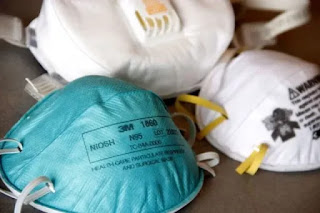
How to get N95 Masks in India - कैसे पाएं मास्क? Yellow, White, Blue or Black ?

कैसे पाएं मास्क? पीला, सफेद, नीला या काला? There are many colors of masks available in India of different colors. What is the difference ? W...