Here are some videos :
Showing posts with label people. Show all posts
Showing posts with label people. Show all posts
Thursday, July 16, 2015
Cochlear Implant - Emotional videos of deaf people hear sound for the first time
Here are some videos :
Mother hears 8-year old son's voice for the first time


Wednesday, June 03, 2015
Do you have Prosopagnosia or Prosopamnesia or Super-recognition ? Face-blindness vs Face-forgetfullness
About 2% of the world's population suffers from face blindness, or prosopagnosia, a neurological condition preventing people from recognizing faces. That's one person in every 50.
Even Brad Pitt said that he has a mild degree of face-blindness.
It is a cognitive disorder of face perception where the ability to recognize faces is impaired, while other aspects of visual processing (e.g., object discrimination) and intellectual functioning (e.g., decision making) remain intact. The term originally referred to a condition following acute brain damage (acquired prosopagnosia), but a congenital or developmental form of the disorder also exists, which may affect up to 2.5% of the population.
Whereas, Prosopamnesia , is a selective neurological impairment in the ability to learn new faces. There is a special neural circuit for the processing of faces as opposed to other non-face objects. Prosopamnesia is a deficit in the part of this circuit responsible for encoding perceptions as memories.

Prosopamnesia presents itself in patients as an inability to recognize people they have previously encountered based on their faces. In this way, it is very easily mistaken as prosopagnosia, which is an inability to perceive or recognize faces. Prosopagnosia is a deficit that occurs earlier in the neural circuit while the facial stimuli is being processed, whereas prosopamnesia takes effect when the brain attempts to encode the processed facial stimuli into memory. Because the distinction between prosopamnesia and prosopagnosia is so close in the neurological circuit, the only phenotypic difference between the two is in the breadth of faces to which a patients symptoms apply. Prosopagnosics cannot recognize faces, even of people within their own families over the span of a lifetime. Prosopamnesiacs show a memory for facial stimuli that they learned prior to the onset of their condition (in the case of acquired prosopamnesia) or for facial stimuli that they have encountered repeatedly for long periods of time (in the case of congenital prosopamnesia).
Prosopamnesia was first proposed as a distinct neurological disorder in 1996. There are currently only two diagnosed cases of prosopamnesia. This is likely due to the fact that it can easily be misdiagnosed as prosopagnosia based on symptoms.
To test yourself for prosopagnosia, the available tests are the JOV and the Cambridge Face Recognition test.
Do the Test online here :
Tuesday, May 26, 2015
Daniel Kish, Ben Underwood are Batman / Daredevil
Some totally blind people learnt to use echolocation to "see" and navigate like a Bat or Dolphins or a Submarine.
True comic book geeks would know that Daredevil is the comic book superhero who should be mentioned here and not Batman.
Watch a video about why Daredevil should be called Batman, and Ghost Rider should be called Daredevil.
These are a few people who can do this.
This following video is a documentary about Ben Underwood, whose eyes were removed at 2 years of age due to eye cancer(retinoblastoma). He later passed away at age 16 due to metstasized cancer.
Daniel Kish
Echolocation has been further developed by Daniel Kish, who works with the blind, leading blind teenagers hiking and mountain-biking through the wilderness and teaching them how to navigate new locations safely, with a technique that he calls "FlashSonar", through the non-profit organization World Access for the Blind. Kish had his eyes removed at the age of 13 months due to retinal cancer. He learned to make palatal clicks with his tongue when he was still a child—and now trains other blind people in the use of echolocation and in what he calls "Perceptual Mobility". Though at first resistant to using a cane for mobility, seeing it as a "handicapped" device, and considering himself "not handicapped at all", Kish developed a technique using his white cane combined with echolocation to further expand his mobility.
Kish reports that "The sense of imagery is very rich for an experienced user. One can get a sense of beauty or starkness or whatever - from sound as well as echo". He is able to distinguish a metal fence from a wooden one by the information returned by the echoes on the arrangement of the fence structures; in extremely quiet conditions, he can also hear the warmer and duller quality of the echoes from wood compared to metal.
Ben Underwood
Diagnosed with retinal cancer at the age of two, American Ben Underwood had his eyes removed at the age of three.
He taught himself echolocation at the age of five. He was able to detect the location of objects by making frequent clicking noises with his tongue. This case was explained in 20/20: Medical Mysteries. He used it to accomplish such feats as running, playing basketball, riding a bicycle, rollerblading, playing football, and skateboarding. Underwood's childhood eye doctor claimed that Underwood was one of the most proficient human echolocators.
Underwood died on January 19, 2009 at the age of 16, from the same cancer that took his vision.
The Polish film director Andrzej Jakimowski met Ben and was inspired by him. In 2012, he released the film "Imagine" about Ian, a spatial orientation instructor, who arrives at a world-renowned Lisbon clinic for the visually impaired to work with blind patients. The doctor in charge of the clinic hires Ian, on condition that the patients won’t be exposed to danger as they learn to move around by themselves using the echolocation methods he teaches.
Just another point to note. These people are NOT using Blindsight. That is a different phenomenon in which people who have normal eyes, but damaged vision processing areas in their brain, can see on a subconscious level - even though they don't realize that they can. They are legally blind.
True comic book geeks would know that Daredevil is the comic book superhero who should be mentioned here and not Batman.
Watch a video about why Daredevil should be called Batman, and Ghost Rider should be called Daredevil.
These are a few people who can do this.
- Daniel Kish - the echolocation teacher
- Ben Underwood
- Dr. Lawrence Scadden
- Lucas Murray
- Juan Ruiz
- Tom De Witte - Batman from Belgium
- Kevin Warwick - not blind, but cyborg batman
This following video is a documentary about Ben Underwood, whose eyes were removed at 2 years of age due to eye cancer(retinoblastoma). He later passed away at age 16 due to metstasized cancer.
Daniel Kish
Echolocation has been further developed by Daniel Kish, who works with the blind, leading blind teenagers hiking and mountain-biking through the wilderness and teaching them how to navigate new locations safely, with a technique that he calls "FlashSonar", through the non-profit organization World Access for the Blind. Kish had his eyes removed at the age of 13 months due to retinal cancer. He learned to make palatal clicks with his tongue when he was still a child—and now trains other blind people in the use of echolocation and in what he calls "Perceptual Mobility". Though at first resistant to using a cane for mobility, seeing it as a "handicapped" device, and considering himself "not handicapped at all", Kish developed a technique using his white cane combined with echolocation to further expand his mobility.
Kish reports that "The sense of imagery is very rich for an experienced user. One can get a sense of beauty or starkness or whatever - from sound as well as echo". He is able to distinguish a metal fence from a wooden one by the information returned by the echoes on the arrangement of the fence structures; in extremely quiet conditions, he can also hear the warmer and duller quality of the echoes from wood compared to metal.
Ben Underwood
Diagnosed with retinal cancer at the age of two, American Ben Underwood had his eyes removed at the age of three.
He taught himself echolocation at the age of five. He was able to detect the location of objects by making frequent clicking noises with his tongue. This case was explained in 20/20: Medical Mysteries. He used it to accomplish such feats as running, playing basketball, riding a bicycle, rollerblading, playing football, and skateboarding. Underwood's childhood eye doctor claimed that Underwood was one of the most proficient human echolocators.
Underwood died on January 19, 2009 at the age of 16, from the same cancer that took his vision.
The Polish film director Andrzej Jakimowski met Ben and was inspired by him. In 2012, he released the film "Imagine" about Ian, a spatial orientation instructor, who arrives at a world-renowned Lisbon clinic for the visually impaired to work with blind patients. The doctor in charge of the clinic hires Ian, on condition that the patients won’t be exposed to danger as they learn to move around by themselves using the echolocation methods he teaches.
Just another point to note. These people are NOT using Blindsight. That is a different phenomenon in which people who have normal eyes, but damaged vision processing areas in their brain, can see on a subconscious level - even though they don't realize that they can. They are legally blind.
Subscribe to:
Posts (Atom)
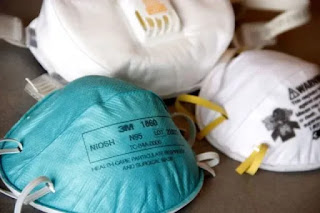
How to get N95 Masks in India - कैसे पाएं मास्क? Yellow, White, Blue or Black ?
कैसे पाएं मास्क? पीला, सफेद, नीला या काला? There are many colors of masks available in India of different colors. What is the difference ? W...
-
 The differentiation between a dragon and a wyvern in Western mythology is that a dragon has six limbs (four legs and two wings) whereas a w...
